
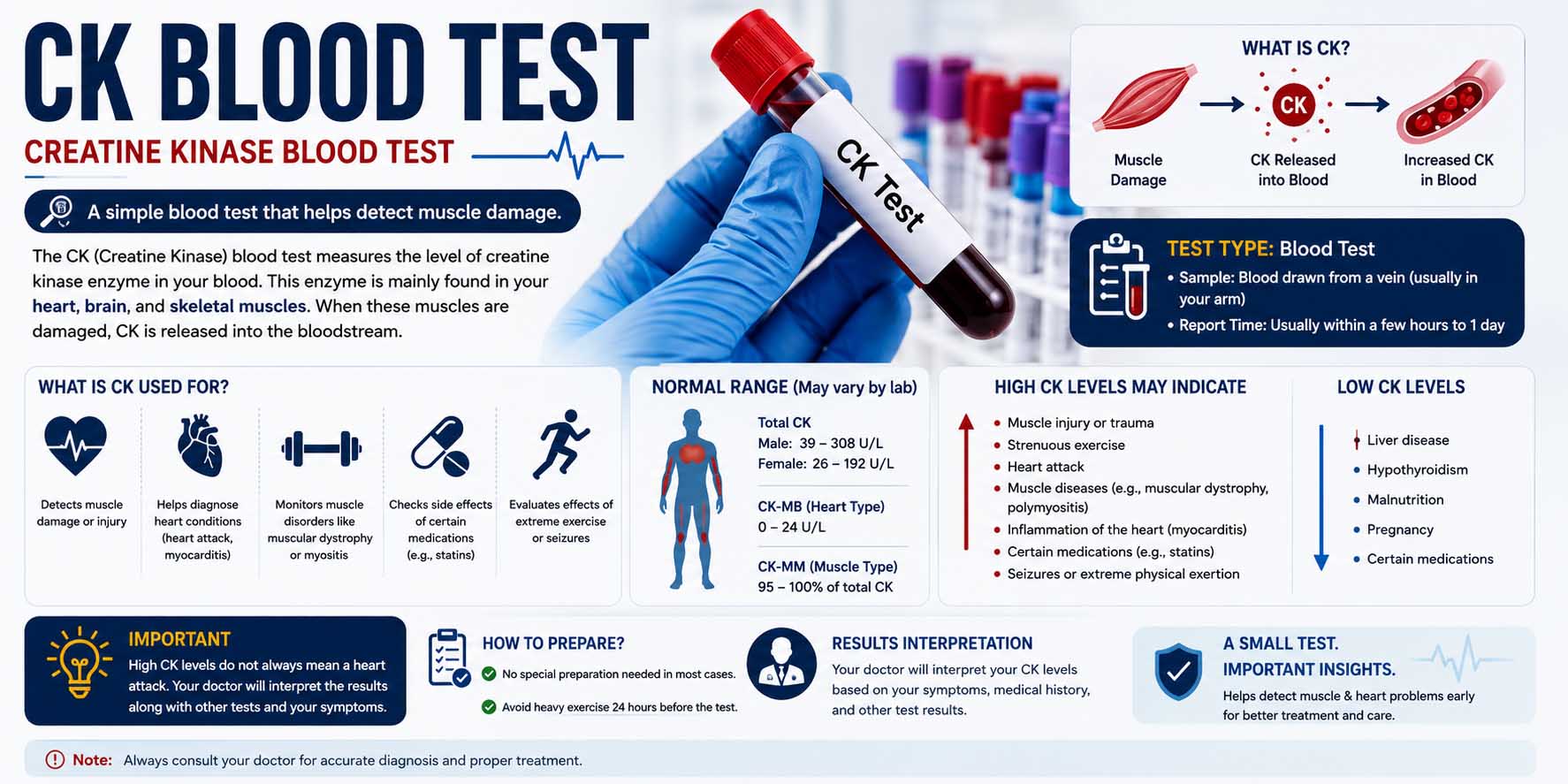
A CK blood test measures creatine kinase, an enzyme found mainly in skeletal muscles, the heart, and smaller amounts in other tissues. When muscle cells become damaged or stressed, they can release CK into the bloodstream and cause the test result to rise. Therefore, doctors may order this test when someone has unexplained muscle pain, weakness, a significant muscle injury, or symptoms suggesting muscle breakdown. However, exercise and several non-dangerous factors can also raise CK, so doctors interpret an abnormal result in context.
What Is a CK Blood Test?
CK stands for creatine kinase, although you may also see the older term creatine phosphokinase, or CPK. This enzyme helps cells produce and use energy, particularly during muscle activity.
So, what is CK in blood test results? In simple terms, the laboratory measures how much creatine kinase circulates in a sample of your blood. Healthy muscle cells normally keep most CK inside the cells. However, damaged muscle membranes can release more of the enzyme into circulation.
A healthcare professional usually collects the sample through a standard blood draw from a vein in the arm. Meanwhile, your doctor may order CK alone or as part of a broader investigation that includes kidney function, electrolytes, liver-related enzymes, urine tests, or other markers.
A CK result cannot reveal the exact cause of muscle damage by itself. Instead, it tells the healthcare team that muscle injury or stress may be occurring and helps guide the next steps.
CK Total Blood Test: What Does It Measure?
A CK total blood test measures the combined amount of different forms of creatine kinase in your bloodstream.
Doctors traditionally recognize three CK isoenzymes:
- CK-MM: Found mainly in skeletal muscle
- CK-MB: Found in heart muscle and also in smaller amounts in skeletal muscle
- CK-BB: Found mainly in the brain and some smooth muscle and other tissues
Today, clinicians usually rely on cardiac troponin rather than CK-MB to diagnose heart muscle injury because troponin is more specific and sensitive for heart attacks. Still, CK remains useful when doctors suspect skeletal muscle damage or rhabdomyolysis.
Meanwhile, symptoms can determine which other tests are appropriate. For example, someone experiencing unexplained left arm pain with chest pressure, sweating, nausea, or shortness of breath needs prompt medical evaluation rather than relying on a CK result to rule out a heart problem.
What Is a Normal CK Blood Test Range?
There is no single normal CK range that applies to everyone. Reference intervals vary substantially among laboratories because results depend on the testing method as well as factors such as age, sex, muscle mass, ancestry, and physical activity.
For that reason, always compare your CK result with the reference range printed on your laboratory report.
People with greater muscle mass may naturally have higher CK levels. Similarly, strenuous exercise can temporarily increase CK even in healthy people. Consequently, a value flagged as high does not automatically mean that a serious disease is present.
Doctors are often more interested in how far the CK level is above the laboratory’s upper reference limit, whether symptoms are present, and whether the value is rising or falling.
The MedlinePlus creatine kinase test guide also explains that CK levels can vary according to factors such as muscle mass, physical activity, and certain medicines. Therefore, the laboratory range and your individual circumstances both matter when interpreting the result.
High CK Blood Test Results: Common Causes
A high CK result usually means muscle cells have released more creatine kinase than usual. However, the cause can range from recent exercise to a serious muscle injury.
Strenuous Exercise
Intense physical activity is a common reason for temporary CK elevation. Heavy resistance training, long-distance running, unfamiliar workouts, and other demanding exercise can stress muscle fibers enough to raise CK.
For instance, exercises discussed in the benefits of deadlifts can be valuable parts of strength training when performed appropriately, yet a demanding lifting session may temporarily increase muscle enzymes.
Because exercise can affect results, tell your healthcare provider about recent workouts before testing. When clinically appropriate, your provider may recommend avoiding strenuous activity before a repeat test.
Muscle Injuries and Trauma
Falls, accidents, crush injuries, burns, seizures, prolonged immobility, and muscle surgery can increase CK levels.
Intramuscular injections can sometimes contribute as well. Therefore, your recent medical procedures and injuries can provide valuable context when a CK result is unexpectedly high.
Muscle Diseases
Certain inflammatory, inherited, metabolic, and autoimmune muscle disorders can cause persistent CK elevation. People may also experience muscle weakness, pain, cramps, or reduced physical ability.
However, CK cannot identify which muscle disease is present. If doctors suspect a muscle disorder, they may use a physical examination, additional blood tests, genetic testing, imaging, electromyography, or sometimes a muscle biopsy depending on the situation.
Medications and Substances
Some medications can raise CK by affecting muscle tissue. Statins, which doctors commonly prescribe to lower cholesterol, are a well-known example, although severe muscle injury from statins is uncommon.
Other medicines and substances may also contribute. Therefore, tell your healthcare professional about prescription drugs, over-the-counter products, supplements, and recreational substances rather than stopping a prescribed medicine on your own.
When Very High CK Can Signal Rhabdomyolysis
Rhabdomyolysis is a potentially serious condition in which skeletal muscle breaks down and releases cellular contents into the bloodstream.
CK can rise substantially during rhabdomyolysis. However, clinicians do not diagnose the condition from one universal CK cutoff alone. Instead, they consider the degree of elevation, symptoms, medical history, kidney function, electrolytes, and urine findings.
Possible symptoms include severe muscle pain, swelling, weakness, and dark brown or tea-colored urine. Yet some people do not develop the classic combination of symptoms.
Because severe muscle breakdown can damage the kidneys and cause dangerous electrolyte abnormalities, suspected rhabdomyolysis needs prompt medical assessment.
In some situations, clinicians may also order a lactic acid blood test when they need information about tissue oxygen delivery, severe illness, or metabolic stress. However, lactate and CK measure different processes and should not be treated as interchangeable tests.
CK Blood Test Meaning When the Result Is Low
People often worry about high CK, but what does a low value mean?
In many cases, a low CK level is not medically concerning. Since CK is concentrated in muscle tissue, people with lower muscle mass may have relatively low blood levels.
Age, physical condition, and individual biological differences can also influence CK. Therefore, clinicians generally pay much more attention to significant elevations than to mildly low results.
Still, doctors consider laboratory results alongside symptoms. If you have persistent weakness, unexplained weight loss, or other concerning changes, your doctor can determine whether you need additional evaluation regardless of the CK number.
Why CK and AST Can Both Rise After Muscle Injury
AST, or aspartate aminotransferase, is commonly associated with liver testing. However, skeletal and cardiac muscle also contain AST.
As a result, significant muscle injury can sometimes raise both CK and AST. This can make laboratory results confusing, especially when someone assumes every elevated AST result indicates liver disease.
If you are wondering what level of AST is dangerous, remember that doctors must interpret the number alongside other laboratory markers, symptoms, medications, and the clinical situation.
Doctors may review ALT, bilirubin, alkaline phosphatase, CK, and other results to help determine whether an abnormal enzyme pattern points more strongly toward liver or muscle injury.
How Doctors Investigate an Abnormal CK Result
One abnormal result does not always lead directly to a diagnosis. Instead, your healthcare provider first looks for an explanation that fits your recent activities, symptoms, and medical history.
For example, they may ask whether you recently completed an intense workout, experienced an injury, had a seizure, started a new medication, or developed muscle pain or weakness.
If the elevation is mild and you feel well, a clinician may sometimes repeat the test after an appropriate period of rest. On the other hand, a substantial elevation accompanied by concerning symptoms may require immediate investigation.
Other tests can include kidney function markers such as creatinine, electrolytes such as potassium, urinalysis, thyroid testing, inflammatory markers, or additional muscle-related studies.
The trend can also matter. For example, a falling CK level after an injury may suggest that active muscle damage is decreasing, although clinical recovery still depends on the underlying cause.
Preparing for a CK Blood Test
A CK test generally requires only a routine blood sample. However, preparation can affect how useful the result is.
Tell your healthcare professional about strenuous exercise you have performed recently. Likewise, mention injuries, injections, medical procedures, and medications or supplements that could influence muscle tissue.
Fasting is not always required specifically for CK. Still, another blood test ordered at the same time may require fasting, so follow the laboratory or clinician’s instructions.
Also, do not stop exercising, change medications, or alter your diet solely to manipulate a laboratory result unless your healthcare provider gives you specific instructions.
Treatment for High CK Levels
Doctors do not treat the CK number itself. Instead, they treat the condition responsible for the elevation.
For example, a temporary exercise-related rise may simply improve with recovery. In contrast, significant muscle trauma requires treatment appropriate to the injury.
Depending on the cause and severity, rhabdomyolysis may require hospital care, close monitoring, and intravenous fluids. Meanwhile, if a medication contributes to muscle problems, a clinician may adjust treatment after weighing the risks and benefits.
If an inflammatory, endocrine, inherited, or metabolic muscle disorder is responsible, treatment depends on the specific diagnosis.
Therefore, trying to lower CK with supplements or home remedies without identifying the cause is not a safe substitute for medical evaluation.
When Should High CK Be Taken Seriously?
The urgency depends on the CK level, your symptoms, the suspected cause, and other test results.
Contact a healthcare professional promptly if muscle pain or weakness is severe, unexplained, or worsening. Likewise, dark urine after extreme exercise, an injury, overheating, or prolonged muscle compression needs medical evaluation.
Seek urgent medical care if symptoms include severe weakness, very little urine, confusion, fainting, breathing difficulty, or significant chest discomfort.
Meanwhile, persistent CK elevation without obvious symptoms still deserves medical review, particularly when repeat testing remains abnormal.
Frequently Asked Questions
What Is CK in a Blood Test Used For?
Doctors mainly use CK to look for evidence of muscle injury or breakdown. The test can support the evaluation of muscle symptoms, significant injuries, rhabdomyolysis, and certain muscle disorders.
Can Working Out Make CK High?
Yes. Strenuous or unfamiliar exercise can raise CK, sometimes considerably. Therefore, recent physical activity is an important part of interpreting the result.
Does High CK Mean I Had a Heart Attack?
No. CK is not specific enough to diagnose a heart attack by itself. Today, clinicians generally use cardiac troponin as the preferred blood biomarker when they suspect acute heart muscle injury.
Can Dehydration Raise CK?
Dehydration can accompany situations that increase the risk of muscle injury, particularly prolonged strenuous exercise or heat illness. However, an elevated CK should not automatically be blamed on dehydration.
How Long Does CK Stay Elevated?
The timing varies according to the cause and severity of muscle damage. CK commonly begins rising within hours after muscle injury and may remain elevated for days. Therefore, doctors sometimes repeat testing to follow the trend rather than relying on a single measurement.
Should I Worry About a Mildly Elevated CK Result?
Not necessarily. Recent exercise, muscle mass, minor injury, medications, and individual variation can influence CK. Still, your healthcare provider should interpret an unexplained elevation, especially when symptoms are present or the level remains high on repeat testing.
What to Do After Receiving Your CK Results
Start by comparing your result with the reference range supplied by your laboratory. Then, consider recent strenuous workouts, muscle injuries, medications, and symptoms that could provide context.
However, avoid diagnosing yourself from the CK value alone. A CK blood test is most useful when a healthcare professional combines it with your symptoms, examination, medical history, and other laboratory findings.
If the elevation is substantial, persistent, or accompanied by severe muscle pain, weakness, dark urine, reduced urination, or other concerning symptoms, seek medical guidance promptly. Once your healthcare team identifies the cause, they can decide whether you need simple monitoring, additional testing, medication changes, or treatment for an underlying condition.